When a damaged SSD starts showing only zeros in every sector, no conventional data recovery software can help - quite simply, there is no data for it to analyze. In many cases, the drive’s model and capacity may also be reported incorrectly by the system.
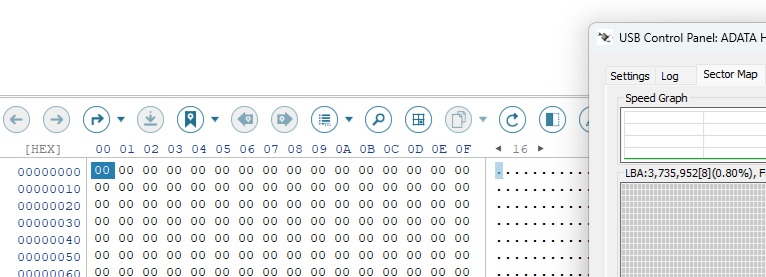
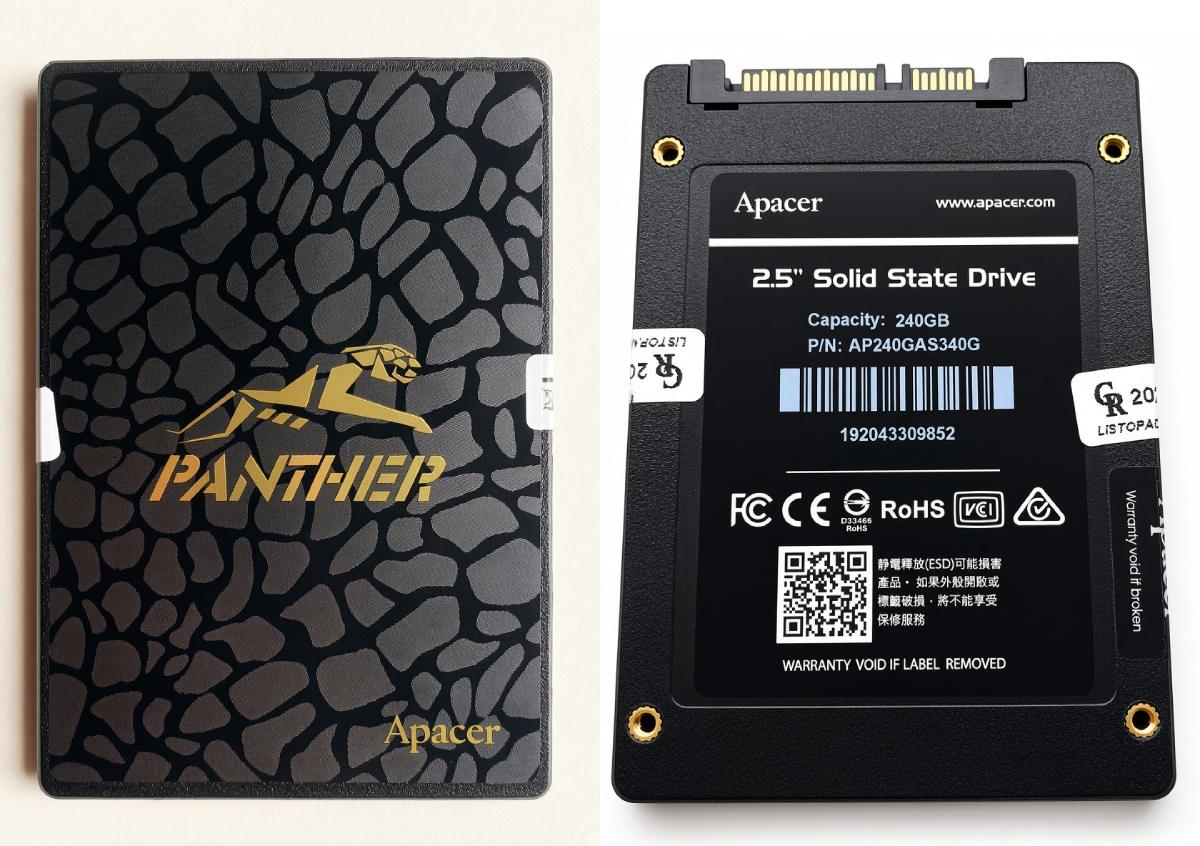
It was with exactly these symptoms that an Apacer SSD drive arrived at our laboratory.
Why Does the Drive Start Showing Zeros?
The SSD controller uses what is known as the FTL (Flash Translation Layer), or translator - a structure that maps the logical sectors (LBA) used by the operating system to their actual physical locations within the NAND flash memory chips. If the drive’s firmware is corrupted and the correct translator cannot be loaded, the controller may respond to every read request with zeros, or the drive may become completely inaccessible.
How Can Data Be Accessed at the Hardware Level?
To gain access to the NAND memory, the drive must first be switched into the so-called manufacturer or kernel mode (Factory / Kernel Mode). In practice, this is done by connecting specific test points (techno mode / ROM mode) and applying power. In this state, the drive executes only low-level commands.
In the next step, the appropriate microcode is loaded into the drive’s RAM from an external source. This allows the controller to be started in recovery mode, the damaged translator to be reconstructed, and direct access to the NAND flash memory chips to be established.
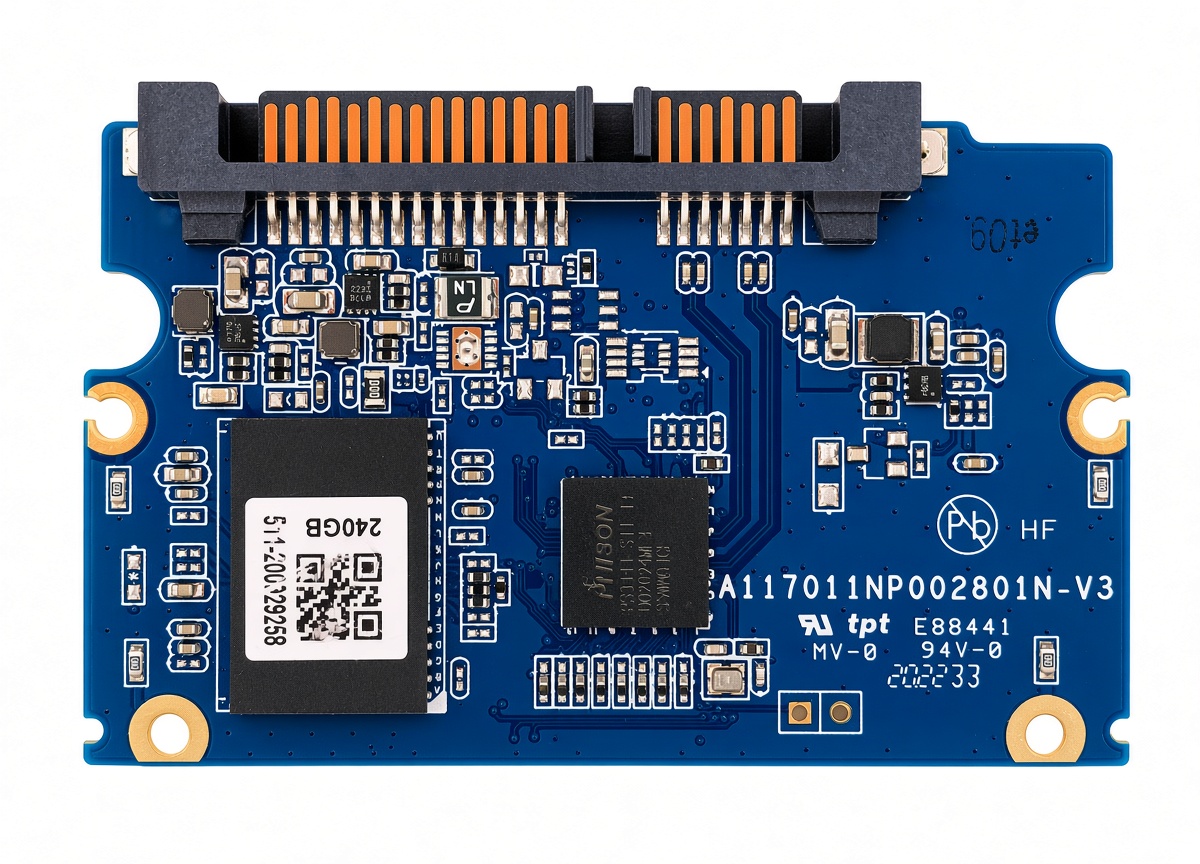
The Specific Case: An Apacer SSD with a Phison PS3111 Controller
The Phison PS3111 controller used in this drive is a common controller for which the microcode required for data recovery is available. After loading the microcode and rebuilding the translator, we were able to successfully access the user’s file system.
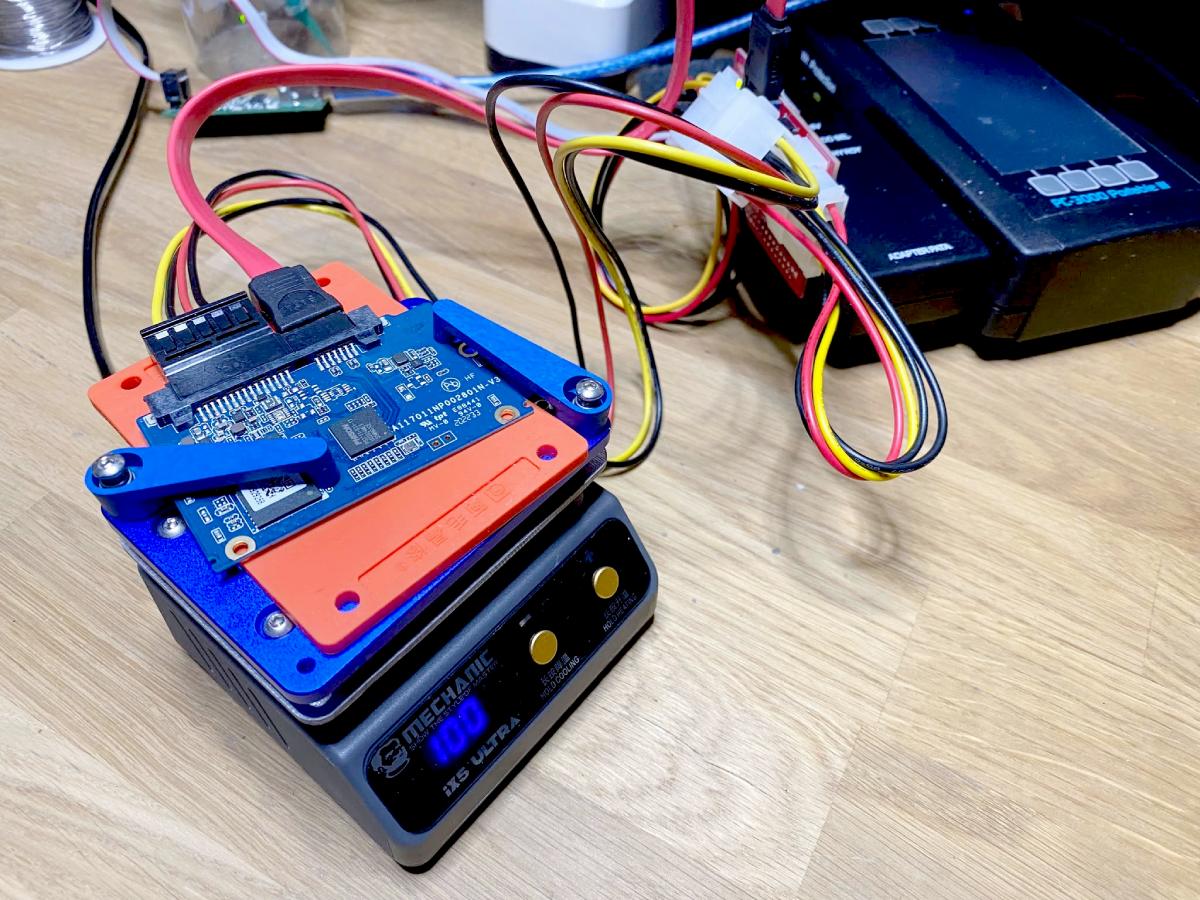
However, the work did not end there. During the data copying (sector-by-sector cloning) process, approximately 6% of the sectors were found to be unreadable. To recover and correctly read these sectors, multiple read passes were performed while varying the temperature of the NAND flash memory chips using thermal control.
Result
We successfully reconstructed and recovered practically 100% of the client’s data.